Un mismo idioma para toda la planta: el agente virtual en acciónOne language for the whole plant: the virtual agent in action
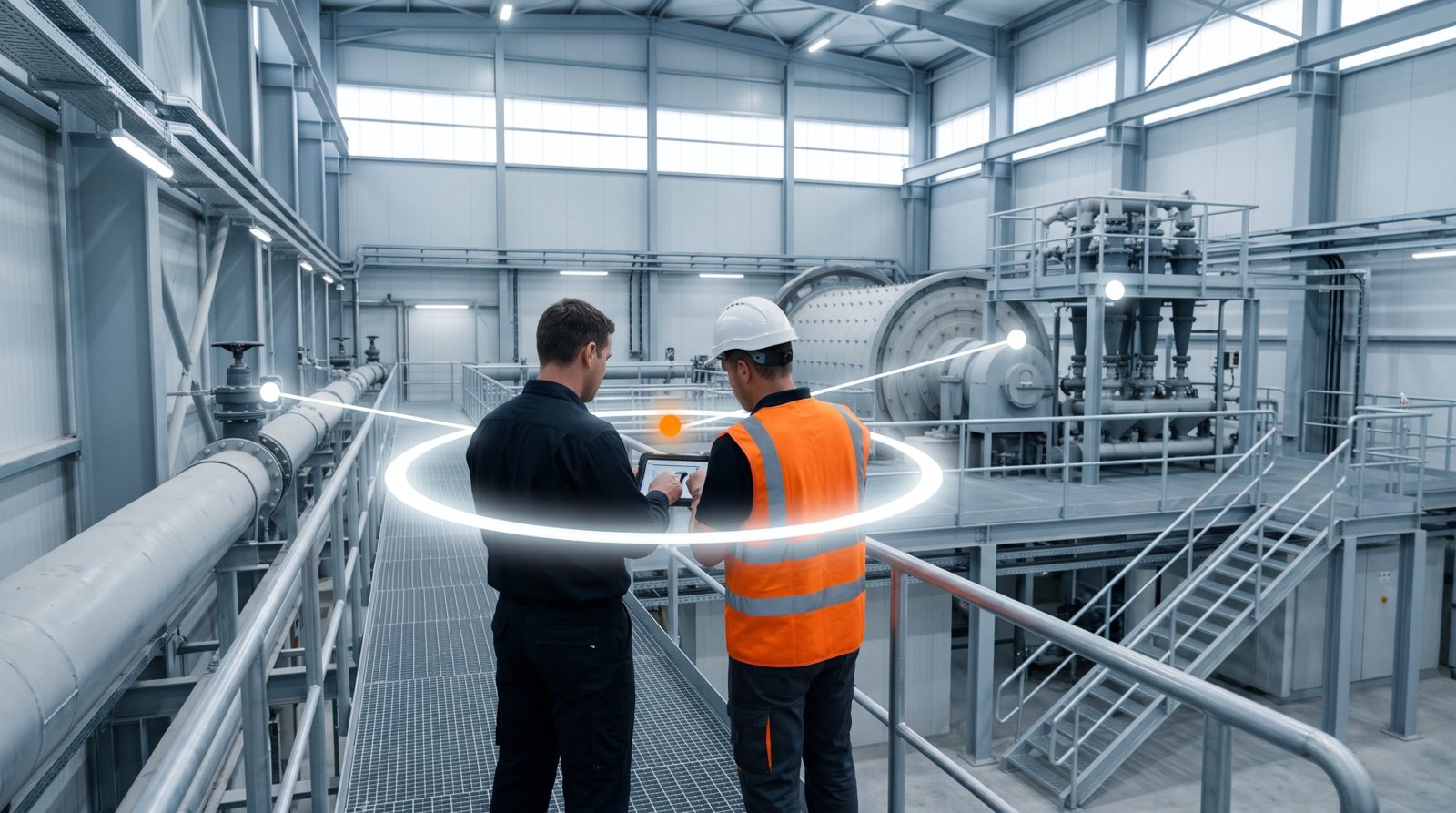
En una planta conviven varios idiomas. El de control habla de lazos, sintonía y saturación. El de instrumentación, de calibración, deriva y señal. El de operación, de tonelaje, estabilidad y metas del turno. Todos describen el mismo proceso, pero no siempre se entienden entre sí.
Dos brechas que se repiten
Los operadores no siempre entienden los tecnicismos. Un sistema puede calcular algo muy valioso y mostrarlo como un índice, una sigla o un gráfico que solo un especialista sabe leer. Si el operador no entiende lo que el sistema le dice, no puede confiar en él.
Instrumentistas y mecánicos no siempre ven las prioridades operativas. Para quien mantiene los equipos, una válvula que se pega o un sensor con deriva es una orden de trabajo más. Lo que no ve es cuánto está afectando a la operación en este momento, y por lo tanto qué tan urgente es.
Lo que cuesta no entenderse
- Los avisos del sistema se ignoran, porque nadie sabe bien qué significan.
- Los sistemas se pasan a manual por desconfianza, no porque estén fallando.
- El mantenimiento se ordena por antigüedad de la solicitud y no por su efecto en el proceso.
- Cada problema necesita a un especialista que traduzca, y ese especialista no está en todos los turnos.
Lo que hace el agente virtual
El agente virtual usa inteligencia artificial para tomar lo que los cálculos complejos están haciendo y llevarlo a lenguaje natural: qué está pasando, por qué, y qué conviene atender. No reemplaza los cálculos ni simplifica el proceso. Cambia la forma de contarlo.
Ejemplo ilustrativo
Como lo diría un sistema técnico: índice de oscilación alto en el lazo de flujo, salida del controlador con patrón compatible con fricción en el elemento final.
Como lo dice el agente virtual: el control de flujo de agua está oscilando porque la válvula se está pegando. Mientras no se repare, el nivel del cajón va a seguir variando. Conviene revisarla en la próxima detención.
La segunda versión le sirve a todos. El operador entiende por qué el nivel no se estabiliza y que no es un error suyo. El instrumentista sabe exactamente qué revisar. Y mantenimiento ve la consecuencia operativa, que es lo que define la prioridad.
Inteligencia artificial que explica, sin alucinaciones
Las métricas, los diagnósticos y las decisiones de nuestros sistemas se obtienen con información concreta y tangible de la planta: mediciones, estados y eventos registrados, procesados por cálculos y reglas que se pueden revisar.
La inteligencia artificial entra después. A partir de su modelo, toma esos resultados y los explica en lenguaje natural. No calcula las métricas ni toma las decisiones: las cuenta.
Esa separación es lo que evita las llamadas alucinaciones, esas respuestas que suenan convincentes pero no tienen respaldo. El agente virtual no inventa valores ni saca conclusiones por su cuenta, porque todo lo que explica proviene de un resultado que ya existe y que se puede comprobar contra el dato que lo origina.
En OTR Agent, por ejemplo, cada acción queda registrada con su razón y visible para el operador, y se puede auditar con el agente virtual. En OPC Nexus, el agente resume el estado de las comunicaciones, y cada frase de ese resumen sale de un dato registrado.
Por qué es práctico
- Ahorra recorrer pantallas. En vez de revisar varias vistas para armar el panorama, el agente lo cuenta en pocas frases.
- Ordena por importancia. Empieza por lo que más conviene atender.
- Sirve en todos los turnos. La explicación está disponible aunque el especialista no esté.
- Acelera el aprendizaje. Quien se incorpora entiende qué hace el sistema desde el primer día.
- Genera confianza. Un sistema que explica lo que hace se usa más que uno que solo muestra números.
El resultado es que operación, instrumentación y mantenimiento miran lo mismo y lo entienden igual. Esa conversación común es, muchas veces, lo que faltaba para que la tecnología instalada entregue todo su valor.
Several languages coexist in a plant. Control speaks of loops, tuning and saturation. Instrumentation speaks of calibration, drift and signal. Operations speaks of tonnage, stability and shift targets. They all describe the same process, but they do not always understand each other.
Two gaps that keep repeating
Operators do not always understand the technical terms. A system can calculate something very valuable and show it as an index, an acronym or a chart that only a specialist can read. If the operator does not understand what the system is saying, they cannot trust it.
Instrument technicians and mechanics do not always see the operational priorities. For those who maintain the equipment, a sticking valve or a drifting sensor is one more work order. What they do not see is how much it is affecting operations right now, and therefore how urgent it is.
What it costs not to understand each other
- System warnings are ignored, because nobody is quite sure what they mean.
- Systems are switched to manual out of distrust, not because they are failing.
- Maintenance is ordered by the age of the request and not by its effect on the process.
- Every problem needs a specialist to translate, and that specialist is not on every shift.
What the virtual agent does
The virtual agent uses artificial intelligence to take what the complex calculations are doing and put it into natural language: what is happening, why, and what should be attended to. It does not replace the calculations or simplify the process. It changes the way the story is told.
Illustrative example
As a technical system would put it: high oscillation index in the flow loop, controller output with a pattern consistent with friction in the final element.
As the virtual agent puts it: the water flow control is oscillating because the valve is sticking. Until it is repaired, the sump level will keep varying. It should be checked at the next shutdown.
The second version works for everyone. The operator understands why the level will not settle and that it is not their mistake. The instrument technician knows exactly what to check. And maintenance sees the operational consequence, which is what defines the priority.
Artificial intelligence that explains, without hallucinations
The metrics, diagnoses and decisions in our systems are obtained from concrete, tangible plant information: measurements, states and recorded events, processed by calculations and rules that can be reviewed.
Artificial intelligence comes in afterwards. From its model, it takes those results and explains them in natural language. It does not calculate the metrics or make the decisions: it tells them.
That separation is what avoids so-called hallucinations, those answers that sound convincing but have nothing behind them. The virtual agent does not invent values or draw conclusions on its own, because everything it explains comes from a result that already exists and can be checked against the data it originates from.
In OTR Agent, for example, every action is logged with its reason and visible to the operator, and can be audited with the virtual agent. In OPC Nexus, the agent summarizes the state of communications, and every sentence in that summary comes from recorded data.
Why it is practical
- It saves going through screens. Instead of reviewing several views to build the picture, the agent tells it in a few sentences.
- It orders by importance. It starts with what most needs attention.
- It works on every shift. The explanation is available even when the specialist is not.
- It speeds up learning. Newcomers understand what the system does from day one.
- It builds trust. A system that explains what it does gets used more than one that only shows numbers.
The result is that operations, instrumentation and maintenance look at the same thing and understand it the same way. That shared conversation is often what was missing for the installed technology to deliver its full value.